36-Cell Ergonomic Inflatable Air Cushion: Engineering Analysis & B2B Wholesale Sourcing Guide
1. Introduction: The Evolution of Ergonomic Seating Surfaces
Sedentary lifestyles across commercial offices, transportation networks, and healthcare facilities have elevated ergonomic seating into an essential health and productivity intervention. For decades, the global seating cushion market has been dominated by static materials—chiefly polyurethane memory foam and honeycomb silicone gel. While inexpensive to mold, these legacy materials suffer from chronic drawbacks: memory foam acts as a thermal insulator that collapses under prolonged body heat, while gel pads add excessive deadweight without providing dynamic pressure redistribution.
To overcome these biomechanical limitations, pneumatically engineered seating solutions have emerged as the premier choice. Engineered by AIRJOUR, the Air Cushion (36 Cells, Model: KOC-HG001) represents a significant leap forward in passive biomechanical ergonomics. By leveraging interconnected thermoplastic polyurethane (TPU) air chambers and fluid convection principles, this cushion provides active pressure redistribution, superior microclimate heat dissipation, and unmatched packaging efficiency tailored for global B2B distributors.
2. Product Deep Dive: Ergonomics, Fluid Convection & Material Science
Understanding the commercial viability of the 36-cell air cushion begins with its underlying biomechanical design. Rather than acting as a passive dampener, the cushion operates as a dynamic hydrostatic pressure redistribution system.
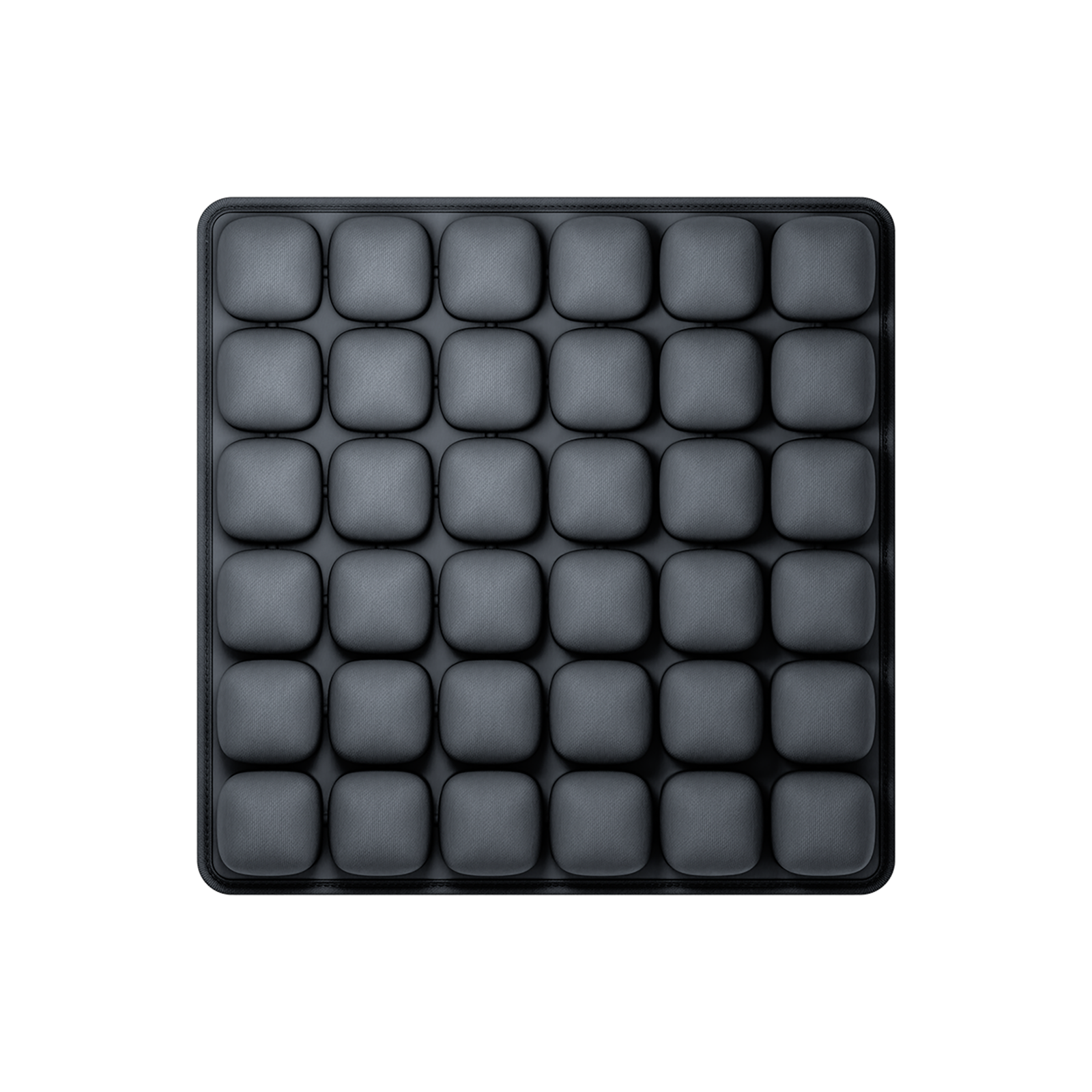
Figure 1: AIRJOUR 36-Cell Ergonomic Pneumatic Cushion featuring a 6×6 interconnected matrix.
2.1 The 36-Cell (6×6) Convective Air Chamber Architecture
The human pelvis exerts concentrated point pressure on the ischial tuberosities ("sit bones") when seated. On rigid or flat foam surfaces, peak interface pressures routinely exceed capillary closing pressure (approx. 32 mmHg), impeding peripheral blood flow and triggering numbness, muscle strain, and decubitus ulcer risks.
Interconnected Air Channels: The 36 independent air cells (arranged in a 6×6 matrix, 4.0–4.5 cm in chamber height) are linked via internal micro-aperture ducts. When the user shifts weight, compressed air automatically transfers from high-pressure contact zones (the ischial region) toward lower-pressure perimeter cells.
≥ 85% Surface Redistribution: By equalizing hydrostatic pressure across the entire pelvic contact area, peak interface pressure is reduced by up to 30%, allowing extended 8- to 12-hour sitting periods without focal soreness.
Passive Microclimate Regulation: The shallow grooves between adjacent individual cells form multidirectional cross-ventilation flutes. Unlike solid foam that seals against clothing, these convective channels allow heat and perspiration vapor to escape freely, maintaining an optimal contact temperature.
2.2 Medical-Grade Polyether TPU vs. Conventional PVC
Many low-cost inflatables on the market rely on polyvinyl chloride (PVC). However, PVC becomes brittle over time, emits volatile organic plasticizers (ortho-phthalates), and hardens in cold weather. AIRJOUR manufactures the bladder from eco-friendly, medical-grade Thermoplastic Polyurethane (TPU) laminated with high-resilience Lycra fabric:
Zero Toxic Leaching: 100% Phthalate-free, DEHP-free, and Latex-free, fully compliant with FDA Class I registration, RoHS, REACH (EC 1907/2006), and California Proposition 65.
Hydrolysis & Flex Fatigue Resistance: High-frequency (HF) welded seams resist burst pressures far exceeding user weight demands, tested up to 150 kg (330 lbs) maximum load capacity.
Skin-Friendly Lycra Surface: Provides a soft, moisture-wicking tactile touch with an anti-slip bottom coefficient (≥ 0.5) to keep the cushion securely anchored to office chairs, automotive seats, and wheelchairs.
3. Head-to-Head Benchmark: TPU Air Cushion vs. Memory Foam vs. Gel
Performance Factor
AIRJOUR 36-Cell TPU Air Cushion
High-Density Memory Foam
Honeycomb Silicone Gel
Pressure Redistribution
Dynamic fluid convection (≥ 85% area)
Static indentation (bottoms out over time)
Elastic deformation (moderate relief)
Breathability & Heat Dissipation
Continuous convective airflow channels
Poor (acts as a thermal insulator)
Moderate (open cell structure)
Net Product Weight
411 ± 20 g (Ultra-lightweight)
700 – 950 g
1,100 – 1,400 g (Heavy)
Deflated Packaging Volume
24 × 23 × 7 cm (Folded) / Flat bag
Bulky (even vacuum packed loses bounce)
Rigid volumetric shape
Adjustability
Custom inflation pressure (Soft to Firm)
Fixed density (non-adjustable)
Fixed durometer
International Freight Burden
Extremely Low (High CBM efficiency)
High dimensional weight surcharges
High gross weight charges
4. The B2B Wholesale Proposition: Margins, Logistics & Scalability
Figure 2: Compact packaging dimensions engineered for ocean freight container density and Amazon FBA warehouse limits.
4.1 Slashing Freight Costs: The Volumetric Shipping Advantage
International shipping freight rates are heavily calculated based on Dimensional Weight (CBM). Traditional foam cushions require paying to transport trapped air across oceans. In contrast, the deflatable design of the AIRJOUR 36-cell cushion maximizes cubic container utilization:
Individual Package: 33 × 32 cm frosted CPE zipper bag with user manual (Total weight: 411 ± 20 g).
Standard Master Carton: 55 × 54 × 41 cm holding 25 units (Gross weight: 12.5 kg).
Amazon FBA Standard Carton: 50 × 49 × 47 cm holding 24 units, fully compliant with maximum parcel dimension thresholds for US/EU fulfillment hubs.
Logistics Savings: Over 60% reduction in ocean and air freight per unit compared to bulk foam cushions, protecting profit margins during volatile shipping markets.
4.2 High Gross Margins Across Four Primary Distribution Channels
With an FOB unit pricing tier between USD 7.00 and USD 8.50 and a global retail MSRP benchmark of USD 29.99 – 39.99, wholesale clients command gross profit margins in excess of 70%.
Medical & Wheelchair Rehabilitation Dealers: Positioned as a lightweight, low-maintenance alternative to clinical wheelchair cushions for elderly care facilities and rehabilitation centers.
Corporate Ergonomics & Office Furniture Wholesalers: Bundled into corporate employee wellness programs and ergonomic upgrades for tech campuses.
Automotive & Long-Haul Fleet Accessories: Distributed through commercial fleet suppliers and automotive accessory chains for drivers spending 10+ hours behind the wheel.
E-Commerce & Amazon Private Label Brands: A prime candidate for online private labeling due to low return rates (< 0.3%) and attractive gift-ready presentation.
5. Technical Specifications Matrix (Model: KOC-HG001)
Parameter
Technical Specification
Model Code
KOC-HG001
Inflated Dimensions
44 × 44 × 4.0-4.5 cm (17.3 × 17.3 × 1.7 in)
Folded / Storage Dimensions
24 × 23 × 7 cm (Folded) / 33 × 32 cm (Flat Bag)
Net Unit Weight
411 ± 20 g
Air Chambers
36 Interconnected Cells (6×6 Matrix)
Materials
Medical-grade Polyether TPU + Breathable Lycra Composite
Maximum Load Capacity
150 kg (330 lbs)
Pressure Distribution Ratio
≥ 85% Surface Area Contact
Color Options
Black, Gray, Army Green, Purple, Khaki (Custom Pantone available)
Global Harmonized Code (HS)
9404.90.90
Regulatory Compliance
FDA Registered, RoHS, REACH, CA Prop 65, Phthalate-free
6. OEM & ODM Customization Capabilities for Brands
Figure 3: Turnkey OEM/ODM capabilities from custom tooling and silk-screen branding to certified packaging design.
Branding & Logo Placement: High-adhesion silk-screen printing, heat-transfer rubber badges, or woven label tags integrated into the side seams.
Custom Fabric & Finishes: Anti-bacterial medical coatings, waterproof PU laminates, or custom Pantone matched Lycra fabrics (MOQ 1,000 pcs).
Inflation Mechanisms: Compatible with compact hand pumps, integrated push-button manual pumps, or custom air valves for quick 10-second inflation/deflation.
Flexible MOQ & Turnaround:
Standard B2B Wholesale MOQ: 500 pcs (FOB .00).
VIP Tier (2,500+ pcs): FOB .00.
Sample / Trial Batches: Supported for rapid market testing (3-5 business days).
Mass Production Lead Time: 15–25 business days from deposit and artwork approval.
7. B2B Sourcing FAQ: Key Answers for Procurement Officers
Q1: What certifications does AIRJOUR hold for international customs clearance?
A: AIRJOUR cushions hold active US FDA Establishment Registration, RoHS compliance verification, EU REACH chemical compliance, and California Proposition 65 certification. All export goods are declared under HS Code 9404.90.90 with standard Certificate of Origin (CO) support.
Q2: How does the cushion prevent air leakage over years of daily commercial use?
A: We utilize precision High-Frequency (HF) ultrasonic seam welding rather than simple heat pressing. Every production batch undergoes a mandatory 24-hour pressure decay test under 0.03–0.05 MPa before packaging, ensuring an air leakage failure rate of less than 0.2%.
Q3: Can we request pre-production samples with custom logo packaging?
A: Yes. Stock physical samples ship within 48 hours for quality evaluation. Custom-printed branding samples can be produced within 5 to 7 business days.
Q4: What are the payment terms and freight logistics supported?
A: Standard terms are T/T 30% deposit with 70% balance payable prior to shipment, as well as L/C at sight and Alibaba Trade Assurance. We support FOB Guangzhou/Shenzhen, CIF destination port, and direct DDP delivery into Amazon FBA warehouses.
8. Partner with AIRJOUR: Request Wholesale Pricing & Sample Kits
Whether you are expanding an ergonomic wellness brand, outfitting a transport fleet, or adding clinically compliant pressure relief cushions to your medical supply catalog, AIRJOUR provides direct-factory reliability, competitive pricing tiers, and rapid turnaround.
👉 Explore Product Details: View Air Cushion (36 Cells) Specification Page
👉 Custom Project Inquiry: Submit an OEM/ODM Design Request
👉 Direct Procurement Contact: Email us directly at info@airjour.com or WhatsApp/Tel: +86 132 4645 2540.